Cost Report
Twin Cities HVAC Cost Report 2026: What Homeowners Actually Pay
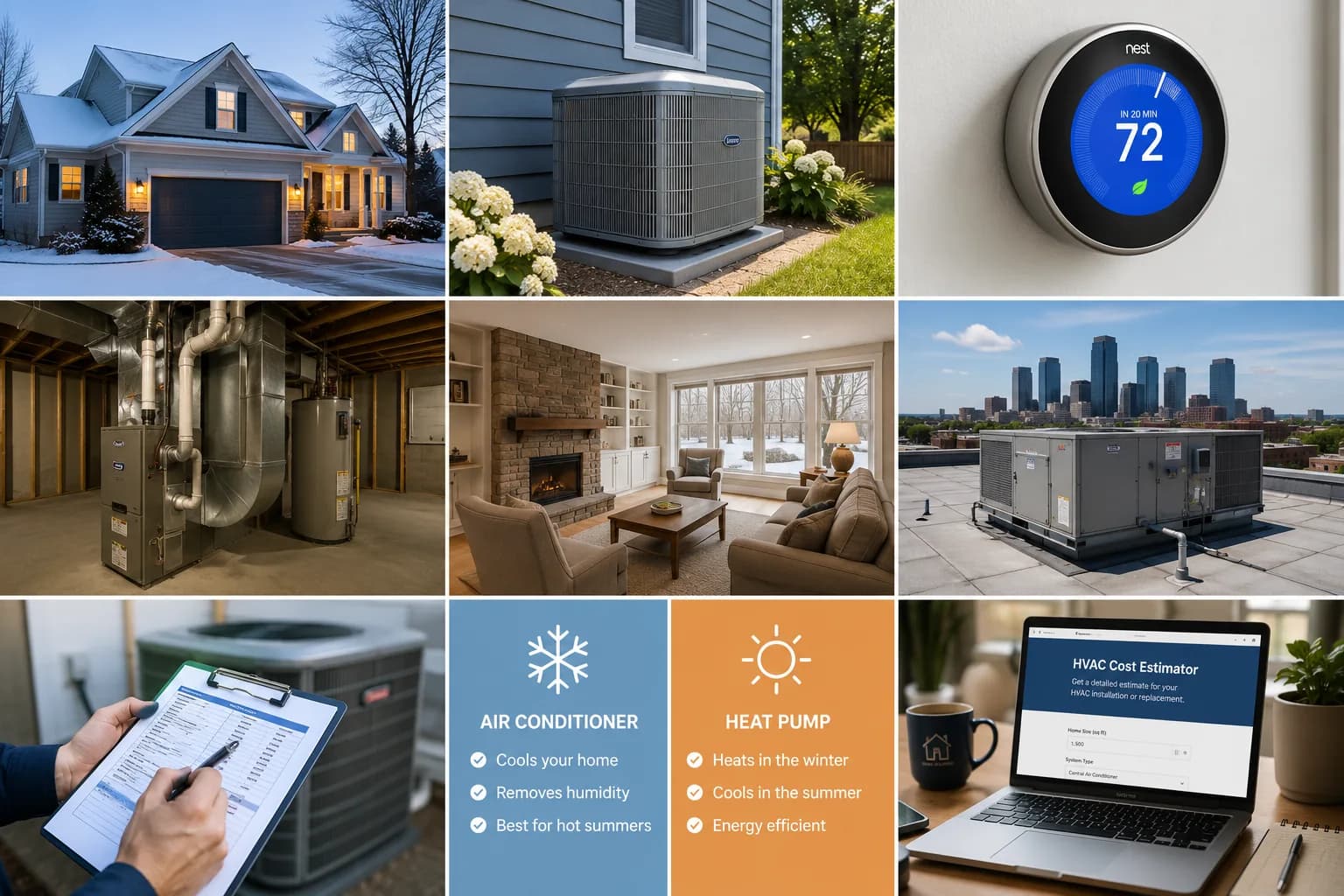
Most HVAC pricing online is either hidden behind a phone call or copied from national averages that are thousands of dollars off for our market. This report is different: it's an independent, plainly-sourced snapshot of what heating and cooling actually costs Twin Cities homeowners in 2026 — replacement and repair ranges, the efficiency premium, and the rebate landscape after the federal tax credit expired.
Every figure here comes from the same internal reference dataset that powers our calculators, so the numbers are consistent across the whole site. Ranges are deliberately broad, because honest HVAC pricing is a range, not a single number. You're free to cite this report — see [how to cite it](#how-to-cite) at the end.
Key takeaways
- A furnace replacement runs $4,000–$9,000 installed; central AC $4,500–$9,500; both together $8,000–$16,500; a cold-climate heat pump $8,000–$18,000 — all before rebates.
- Most furnace repairs land between $150–$600; the part matters less than labor, diagnosis, and availability.
- The biggest single change for 2026: the federal 25C tax credit expired at the end of 2025, so incentives now come from Minnesota utility rebates (largest for heat pumps) and the pending state program.
- Installation quality moves lifetime cost more than brand does — a right-sized, well-installed mid-tier system beats a premium unit installed poorly.
Free interactive tool
HVAC Cost Estimator
See a real Twin Cities price range for a new furnace, AC, or heat pump before you talk to anyone.
Replacement cost by system (Twin Cities, installed, before rebates)
These are full installed prices — equipment, labor, permit, and removal of the old system — for a standard replacement in an existing home with usable ductwork. Lifespans are typical, well-maintained expectations in Minnesota's climate.
| System | Installed range | Typical lifespan |
|---|---|---|
| Gas furnace | $4,000–$9,000 | 15–20 years |
| Central air conditioner | $4,500–$9,500 | 12–17 years |
| Furnace + AC (replaced together) | $8,000–$16,500 | — |
| Cold-climate heat pump | $8,000–$18,000 | 12–15 years |
| Boiler | Varies by system | 20–30 years |
Typical repair costs
Most furnace repairs run $150–$600 — a flame sensor or ignitor at the low end, a blower motor or control board higher. A cracked heat exchanger is the exception: it's a safety issue that usually means replacing the furnace. Common AC repairs (a capacitor, contactor, or fan motor) tend to be a few hundred dollars; a refrigerant leak or a failed compressor is where costs climb and repair-versus-replace enters the picture.
As a rule of thumb, once a system is past its typical lifespan and a repair would cost more than about a third of a new system, replacement usually wins on total cost. Our repair-or-replace calculator applies that math to your specific system.
The 2026 rebate landscape
Incentives materially change the real cost of high-efficiency equipment, and 2026 looks different from prior years. The headline: the federal Energy Efficient Home Improvement Credit (25C) — historically 30% of cost, up to $600 for a furnace or AC and $2,000 for a heat pump — expired December 31, 2025 and is not available for 2026 installs.
What remains: Minnesota utility rebates. Xcel Energy (electric) rebates central AC, heat pumps, and smart thermostats; CenterPoint Energy (gas) rebates high-efficiency furnaces and boilers. Heat pumps draw the largest rebates. Amounts change every program year, so we don't quote them — verify current figures in our rebate database.
What drives Twin Cities prices
- Climate: a demanding heating season pushes homeowners toward cold-climate and high-efficiency equipment sized for real Minnesota loads
- Home size and ductwork: larger homes and duct modifications add capacity and labor
- Efficiency tier: high-efficiency and modulating equipment costs more up front
- Electrical and venting: heat pump panel upgrades or new sidewall venting add cost
- Season and urgency: emergency winter replacements price higher than off-season work
- Install quality: the single biggest driver of lifetime cost, more than brand
Methodology
Figures are editorial planning ranges for the Twin Cities metro, derived from published contractor pricing, manufacturer equipment costs, typical local labor, and Minnesota utility program structures — reviewed and reconciled against a single internal reference dataset so no figure contradicts another across the site.
We express prices as broad low-to-high bands rather than single points, and we do not apply rebates inside the ranges (incentives change yearly). We never invent statistics or carry a prior year's rebate amount forward. For the full list of primary sources and our review process, see our editorial policy and methodology.
How to cite this report
This report is free to cite and reference. If you use these figures, please attribute them to EaganHVACs and link back to this page so readers can see the methodology and current data.
Suggested citation: "Twin Cities HVAC Cost Report 2026," EaganHVACs, https://www.eaganhvacs.com/resources/twin-cities-hvac-cost-report-2026.
Journalists & bloggers
Turn this guide into your own numbers
Free interactive tools that personalize everything above in seconds.
See a real Twin Cities price range for a new furnace, AC, or heat pump before you talk to anyone.
Open the toolShould you fix your system or replace it? Get a data-based answer in 30 seconds.
Open the toolTell us your utility and what you're installing, and see the Xcel, CenterPoint, and federal rebate programs you likely qualify for.
Open the toolPut this into action
Use these free tools and guides to plan your project — then gather your own written quotes from local contractors and compare them with confidence.
Free download
Get the free Minnesota HVAC Buyer's Kit
The quote-comparison checklist, the exact questions to ask a contractor, fair Twin Cities price ranges, and the Minnesota rebate cheat sheet — emailed to you, free.
FAQ
Related questions
How much does HVAC replacement cost in the Twin Cities in 2026?
Before rebates: a furnace runs $4,000–$9,000 installed, central AC $4,500–$9,500, both together $8,000–$16,500, and a cold-climate heat pump $8,000–$18,000. Your exact price depends on home size, efficiency, ductwork, and access.
Did HVAC costs change in 2026?
The biggest change is incentives, not equipment prices: the federal 25C tax credit expired December 31, 2025, so 2026 projects rely on Minnesota utility rebates (largest for heat pumps) and the state's pending program rather than the federal credit.
Can I use these figures on my own site?
Yes — this report is free to cite with attribution to EaganHVACs and a link back to this page so readers can see the methodology. Email us if you need a specific figure verified for a story.