Cost Guides
Furnace Replacement Cost in Minnesota: What You'll Really Pay
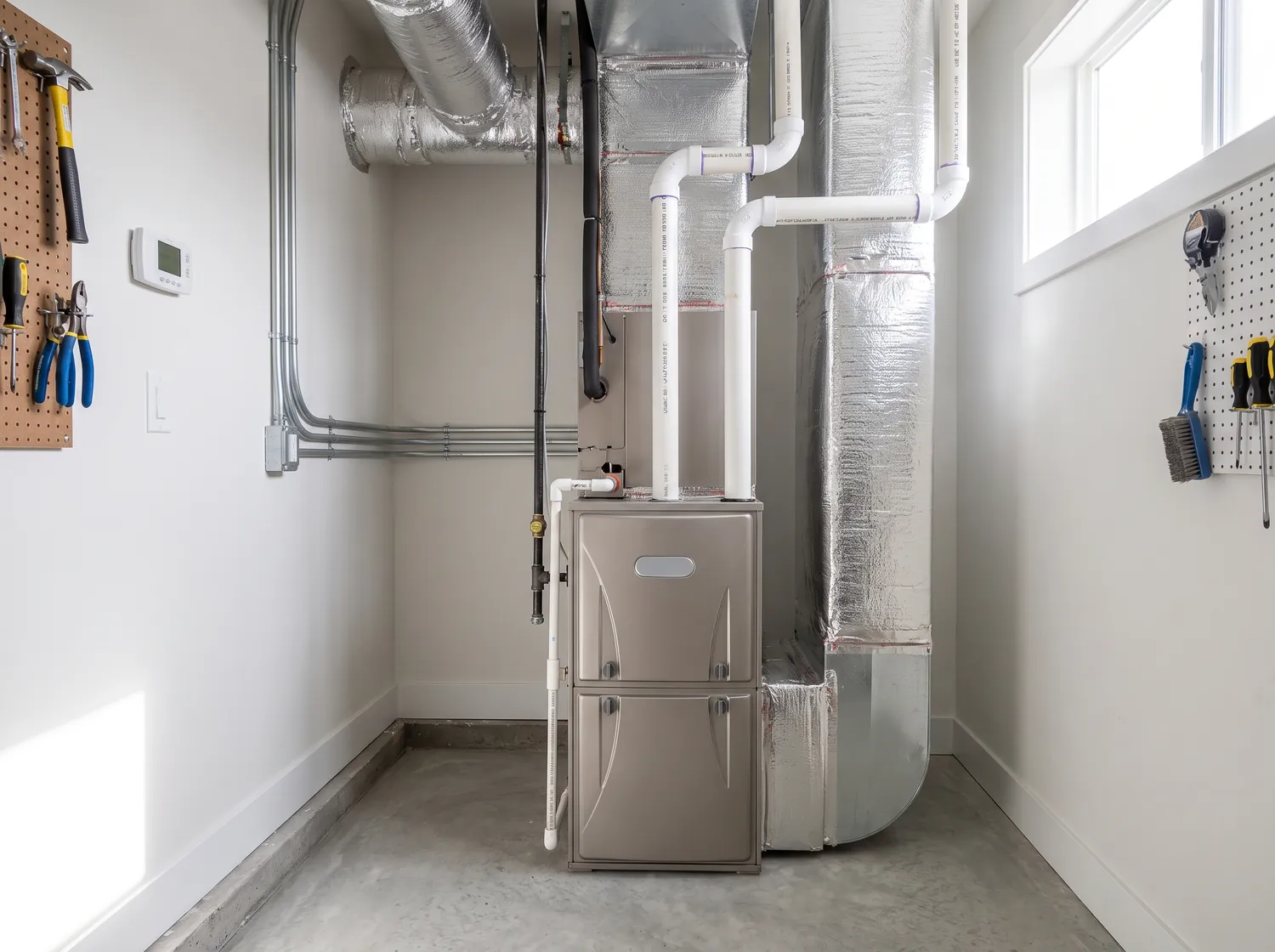
A new furnace is one of the largest single purchases a Minnesota homeowner makes, and it almost always happens under pressure — usually the week the old one dies in January. The goal of this guide is to take the pressure off: to show you what a furnace replacement actually costs in the Twin Cities, what moves the price up or down, and how to tell a fair quote from a padded one.
These are real planning ranges, not a sales pitch. The only exact number is a written quote after a contractor has seen your home — which is exactly why comparing two or three quotes is worth the effort. When you want a personalized figure in seconds, the HVAC cost estimator turns these ranges into a number for your specific home.
Key takeaways
- Most Twin Cities furnace replacements run $4,000–$9,000 installed, depending on efficiency and home size.
- High-efficiency (95%+ AFUE) furnaces cost more up front but qualify for Minnesota rebates and tax credits and lower your gas bill every winter.
- The quality of the installation affects lifespan and efficiency as much as the brand — a great furnace installed poorly won't last.
- If your furnace is under ~15 years old, run the numbers before replacing — the repair-or-replace tool gives a quick, unbiased read.
Free interactive tool
HVAC Quote Analyzer
Paste in what your contractor's quote includes and get a completeness score plus the exact questions to ask before you sign.
What a new furnace costs in the Twin Cities
Installed price — meaning equipment, labor, permit, and removal of the old unit — is what matters, not the sticker price of the furnace itself. Here's how the ranges typically break down by efficiency in the Minnesota market.
| Furnace type | Efficiency (AFUE) | Typical installed range |
|---|---|---|
| Standard efficiency | 80% | $4,000 – $6,000 |
| High efficiency | 95%+ | $5,500 – $8,000 |
| Premium / modulating | 96–98%+ | $7,000 – $9,000+ |
Why Minnesota leans high-efficiency
What drives your price up or down
- Efficiency rating (AFUE) — higher efficiency equipment costs more but lowers operating cost
- Furnace size (BTU) — correctly sized for your home via a load calculation, not a rule of thumb
- Single-stage vs. two-stage vs. modulating burners — more comfort and efficiency, higher cost
- Existing ductwork, gas line, and venting — modifications add labor
- Whether it's paired with a new AC or coil at the same time (often cheaper together)
- Emergency vs. planned timing — mid-winter no-heat replacements can carry a premium
Should you repair instead?
Replacement isn't always the right call. A useful rule of thumb: if the furnace is under 15 years old and the repair costs less than about a third of a new system, repair usually wins. Past 15 years — or facing a cracked heat exchanger — replacement is typically the sounder investment.
Get an unbiased read in 30 seconds
Rebates and tax credits that lower the cost
A high-efficiency furnace's higher price is partly offset by incentives. CenterPoint Energy offers rebates on qualifying high-efficiency gas furnaces. (The federal 25C credit that once applied to the most efficient models expired at the end of 2025, so for 2026 the savings come from utility rebates.) Amounts change, so verify current figures — our Minnesota rebates guide and rebate database track what's available and who qualifies.
Replace now, or wait?
Pros
- Planned (off-season) replacements avoid the mid-winter emergency premium
- You have time to gather and compare multiple quotes
- A new high-efficiency system starts lowering your gas bill immediately
- You can capture current rebates before programs change
Cons
- Up-front cost is significant if the current furnace still works
- Financing means monthly payments (though often less than the energy savings)
- Prices and rebates can shift year to year in either direction
How to compare furnace quotes fairly
The single biggest mistake is comparing a low number against a high number without checking what's inside each. Make the quotes apples-to-apples:
- Same efficiency (AFUE) and comparable equipment tier on every quote
- A load calculation to justify the size — not just 'same size as the old one'
- Permit included (required in Minnesota) and who pulls it
- Written scope: venting, gas line, thermostat, and old-unit removal
- Labor warranty length, not just the manufacturer's parts warranty
A price far below the rest is a red flag
Turn this guide into your own numbers
Free interactive tools that personalize everything above in seconds.
Paste in what your contractor's quote includes and get a completeness score plus the exact questions to ask before you sign.
Open the toolSee a real Twin Cities price range for a new furnace, AC, or heat pump before you talk to anyone.
Open the toolEstimate the monthly payment on a new furnace, AC, or heat pump — and see how term and rate change it.
Open the toolPut this into action
Use these free tools and guides to plan your project — then gather your own written quotes from local contractors and compare them with confidence.
Free download
Get the free Minnesota HVAC Buyer's Kit
The quote-comparison checklist, the exact questions to ask a contractor, fair Twin Cities price ranges, and the Minnesota rebate cheat sheet — emailed to you, free.
FAQ
Related questions
How much does a new furnace cost in Minnesota?
Most Twin Cities furnace replacements fall between $4,000 and $9,000 installed. Standard 80% AFUE units sit at the low end; high-efficiency (95%+ AFUE) modulating furnaces reach the top. Home size, ductwork, and installation complexity move you within that range.
Is a high-efficiency (95%+ AFUE) furnace worth it in Minnesota?
For most Minnesota homes, yes. Our long heating season means the monthly savings recover the price difference faster than in warmer states, and high-efficiency models qualify for rebates and tax credits that narrow the up-front gap.
How long does furnace installation take?
A straightforward furnace swap is usually a one-day job. Adding or modifying ductwork, venting, or a gas line — or installing a furnace and AC together — can extend it to a second day.
Should I replace my furnace and AC at the same time?
If both are near end of life, replacing them together often saves on labor and ensures the two systems are matched for efficiency. If your AC is significantly newer, replacing just the furnace usually makes more sense.