Cost Guides
Furnace Repair Cost in Minnesota: Common Repairs & Prices
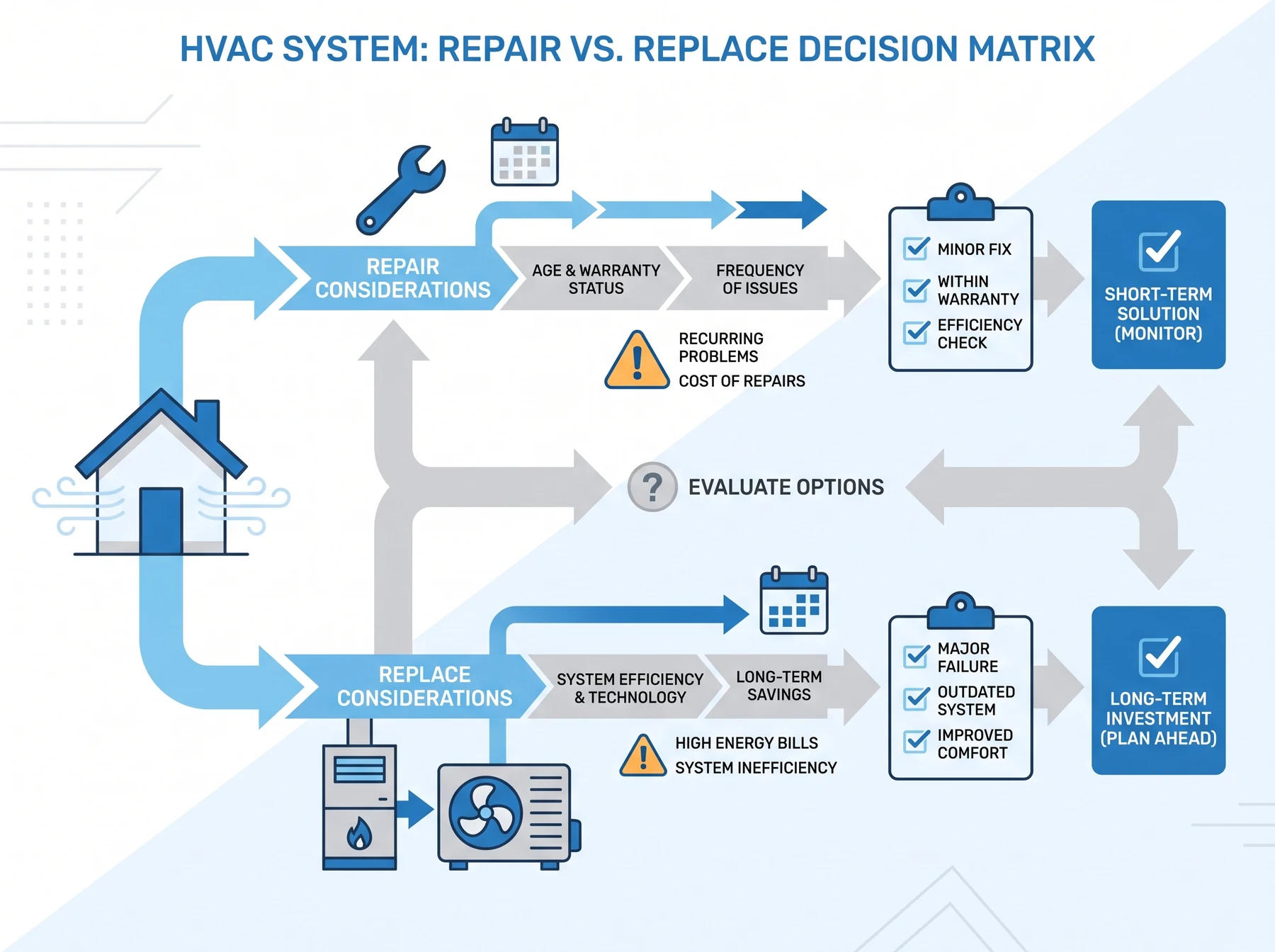
A furnace that quits in a Minnesota winter feels like an emergency — and the price uncertainty makes it worse. The good news: many furnace repairs are inexpensive and same-day. Here's what common furnace repairs actually cost in the Twin Cities, so you can tell a fair price from a padded one, even at 10 PM in January.
If your furnace is getting on in years, check whether repair even makes sense with the repair-or-replace calculator before you commit.
Key takeaways
- Most furnace repairs run $150–$600; blower motors, control boards, and heat exchangers cost more.
- A dirty flame sensor or a failed ignitor — both cheap — cause a large share of no-heat calls.
- A cracked heat exchanger is a safety issue that usually means replacement, not repair.
- No-heat emergency visits on nights and weekends carry a premium — ask about it upfront.
Free interactive tool
Repair or Replace Calculator
Should you fix your system or replace it? Get a data-based answer in 30 seconds.
Typical furnace repair costs in the Twin Cities
Parts and labor included. The diagnostic fee is usually quoted upfront and often credited toward the repair.
| Repair | Typical range |
|---|---|
| Flame sensor cleaning/replacement | $80 – $250 |
| Hot surface ignitor | $150 – $350 |
| Draft inducer motor | $300 – $900 |
| Control/circuit board | $400 – $1,200 |
| Blower motor | $400 – $1,500 |
| Heat exchanger (usually replace furnace) | $1,500+ |
What drives the price
- The failed part — a flame sensor is cheap; a blower motor or board is not
- No-heat emergency timing (nights, weekends, holidays)
- Your furnace's age and whether parts are still available
- High-efficiency (condensing) furnaces have more parts that can fail
A gas smell is not a repair — it's an emergency
Repair or replace?
A cracked heat exchanger is the clearest replacement trigger — it's a carbon-monoxide safety issue, and the part costs so much that a new furnace is usually the better spend. Beyond that, the rule of thumb holds: if the repair is more than about a third of a new furnace and yours is past 15 years, replace it. The furnace replacement cost guide shows what new systems run.
How to avoid overpaying
- Get the diagnosis and price in writing before work begins
- Ask what the emergency/after-hours premium is before booking, if it's not a true emergency
- For repairs over ~$800 on an older furnace, get the replacement number too
- Be wary of a heat-exchanger 'crack' diagnosis with no photo — ask to see it
Sanity-check any repair quote
Turn this guide into your own numbers
Free interactive tools that personalize everything above in seconds.
Should you fix your system or replace it? Get a data-based answer in 30 seconds.
Open the toolPaste in what your contractor's quote includes and get a completeness score plus the exact questions to ask before you sign.
Open the toolSee a real Twin Cities price range for a new furnace, AC, or heat pump before you talk to anyone.
Open the toolPut this into action
Use these free tools and guides to plan your project — then gather your own written quotes from local contractors and compare them with confidence.
Free download
Get the free Minnesota HVAC Buyer's Kit
The quote-comparison checklist, the exact questions to ask a contractor, fair Twin Cities price ranges, and the Minnesota rebate cheat sheet — emailed to you, free.
FAQ
Related questions
How much does furnace repair cost in Minnesota?
Most furnace repairs run $150–$600 — a flame sensor or ignitor at the low end, a blower motor or control board higher. A cracked heat exchanger is the exception: it's a safety issue that usually means replacing the furnace rather than repairing it.
Why won't my furnace stay lit?
A furnace that lights then shuts off is often a dirty flame sensor — a cheap, common fix. It can also be a failing ignitor or a safety switch doing its job. A technician can pinpoint it quickly, and it's usually an inexpensive repair.
Is it worth repairing a 20-year-old furnace?
Often not, especially for a major part. Past 15–20 years, if the repair runs more than about a third of a new furnace, replacement usually makes more financial sense — and a new high-efficiency unit lowers your gas bill. Run the numbers with the repair-or-replace tool.
How fast can someone fix a no-heat furnace?
For no-heat emergencies in winter, most Twin Cities HVAC companies offer same-day and 24/7 service. Common parts like ignitors and flame sensors are usually carried on the truck for on-the-spot repairs — ask when you call.